Strategy
Comment créer un podcast professionnel pour sa marque ?


A podcast studio isn't just "a room with microphones." It's an environment designed for one thing: to allow you to record a smooth, credible, and enjoyable episode without technical stress, background noise, or wasted time. And when it comes to branded podcasts (especially in B2B), the difference is immediately apparent: clean sound, a clear image if you're filming, a setting that matches your brand identity... and an episode that can truly be broadcast anywhere.
If you're here, it's probably because you have a very specific question: where should you record? And above all: how do you choose a podcast studio that doesn't sell you equipment, but results? In this guide, we'll clarify what a good podcast studio should offer you, how a session works, what to prepare before you come, and how Calliopé can help you transform a simple recording into content that will fuel your communication over time.
You can record a podcast "anywhere." The real question is: at what cost in terms of quality and your time?
In the office, you often have echoes, background noise (air conditioning, street noise, open space), voice variations, and above all, an invisible constraint: you spend a crazy amount of energy "paying attention." Remotely, friction decreases... but quality becomes dependent on the guests' equipment, the network, and the settings. You can get a decent result, but it's difficult to achieve a premium, consistent output, episode after episode.
A podcast studio, on the other hand, is designed to ensure consistency. The conditions are controlled: acoustics, microphones, gain, monitoring, lighting if needed, framing if you're recording a video podcast. And above all, you free up your mental bandwidth: you can focus on the conversation, not the technical aspects.
A good studio is not just about "expensive equipment." It is recognized by the way it protects your recording.
First, there's acoustics. That's the foundation. A serious podcast studio is treated to avoid reverberation, limit aggressive frequencies, and give that "professional" sound that we immediately associate with high-quality podcasts. Next, there's the audio chain: clean recording, consistent levels, monitoring for live correction, and a safety margin to avoid saturation.
Then there's the experience. The best podcast studio is one where you don't feel like you're on a film set. Everything should be simple: sit down, talk, get guidance if needed, and leave with a usable episode.
Finally, if you are recording a video podcast, a good studio should also manage the image consistently: stable lighting, flattering framing, a backdrop that does not distract, and an aesthetic that serves your identity (not that of the studio).
At Calliopé, the idea is not to rent you a room and leave you to manage everything yourself. The goal is to produce a podcast that can be listened to (and watched) as serious content, ready to be broadcast on your channels.
In practical terms, Calliopé can record your podcast in its Paris studio, but can also adapt to your requirements (on-site filming or remote configuration). The agency works with both audio and video: recording, editing, mixing, sound design, and if you're filming, post-production geared towards distribution (titles, subtitles, vertical versions, excerpts). This is what makes all the difference, because a long episode alone is no longer enough: it's the excerpts and variations that create repetition and discoverability.
Above all, the experience is designed with branding in mind. The decor can be customized to match your DNA, so your podcast studio doesn't look like everyone else's. You don't just come "to a studio"; you come to build a recurring universe for your show.
For studio recording projects, Calliopé offers a solution in Paris, in the 15th arrondissement. This is an important factor for many corporate teams: easy access, a premium image, a setting that puts guests and partners at ease, and smooth logistics for back-to-back recordings.
It's also a detail that matters when you have high-profile guests: a well-located, comfortable, and well-organized podcast studio reduces friction. And the less friction there is, the more regularly you can record.
The most effective answer is often: consider both from the outset, then decide based on your strategy.
If your priority is long listening sessions, an intimate relationship with the voice, and multitasking consumption (in the car, while exercising, on public transportation), audio is unbeatable. If your priority is discovery, virality, reuse on social media, and YouTube referencing, filmed podcasts (video podcasts) become a huge lever.
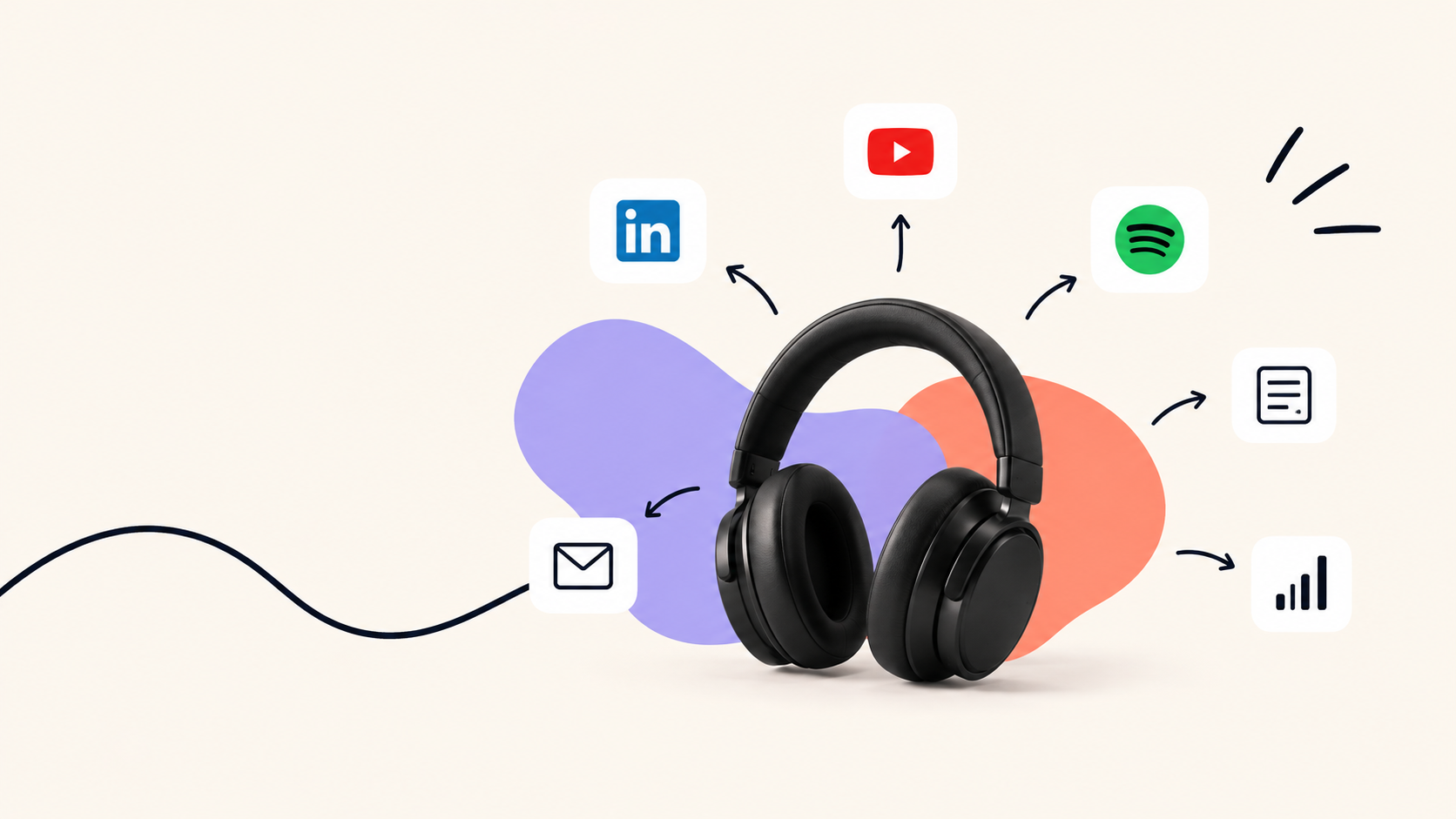
In reality, many brands make a simple choice: they record in a podcast studio with integrated video capture, then distribute the audio on platforms and the video on YouTube, while recycling excerpts on LinkedIn, Instagram, or TikTok. This is precisely where the studio becomes profitable: one session = one episode + dozens of derivative content pieces.
A successful session is not one where you have "everything under control." It is one where you were able to speak naturally.
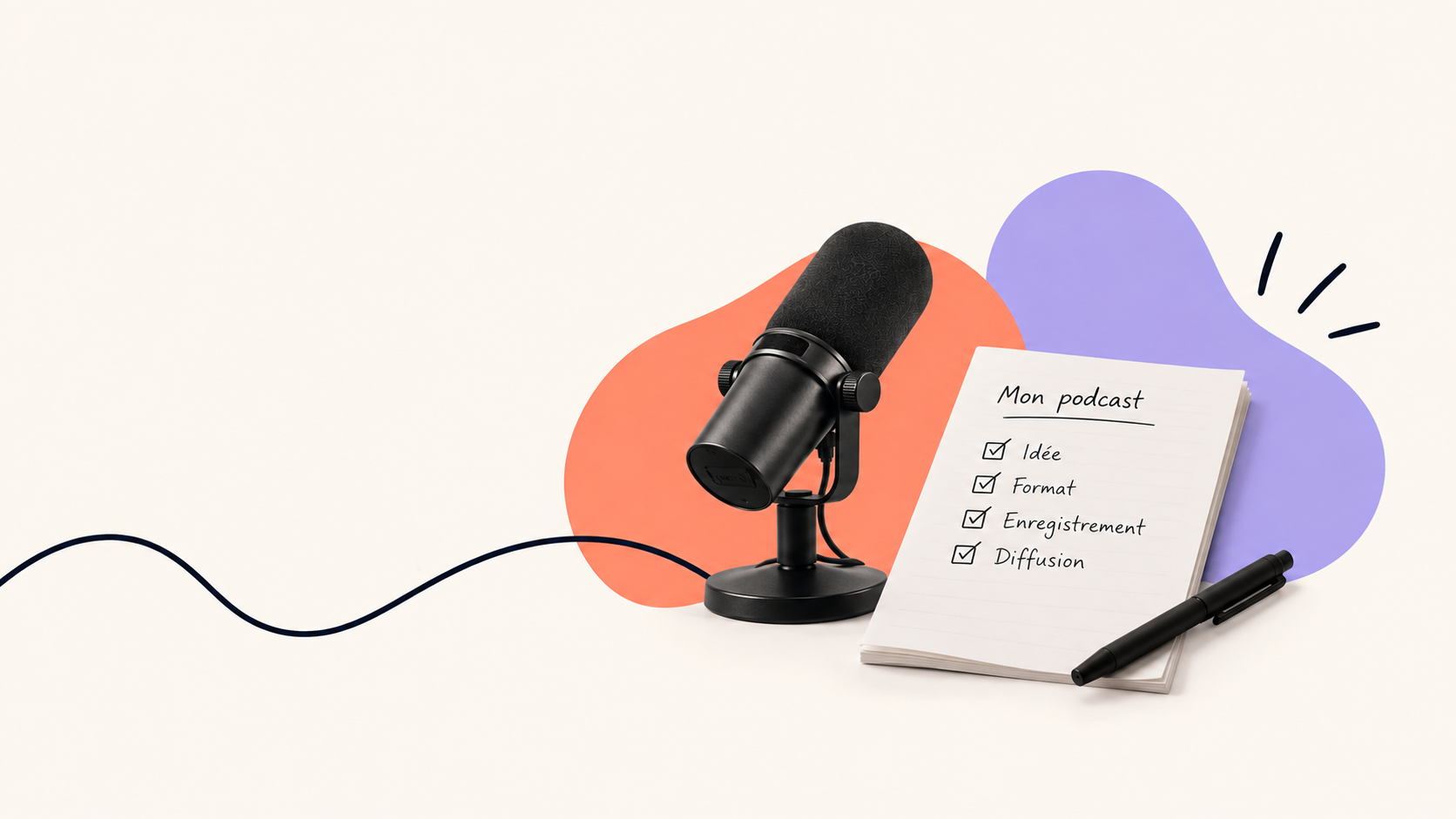
Upstream, Calliopé helps to define the format, level of preparation, episode structure, and role of each participant. This can range from simple guidance to more editorial preparation (intro, transitions, questions, conclusion, CTA). On the day, everything must be ready: setup, audio settings, voice tests, framing if video, then recording.
Next comes the part that really makes the difference: post-production. Editing, cleaning, balancing, sound design, and if video, titling, subtitles, and formats adapted to networks. The goal is that you don't have to "finish" the episode yourself. You get consistent content that's ready to be published.
The cost of a podcast studio depends less on the "location" than on what you want to achieve with the output.
If you are only recording a raw episode, the budget is nothing like that of a complete package, which includes editorial preparation, multi-camera recording, editing, mixing, graphics, subtitles, vertical clips, YouTube thumbnails, and distribution support.
The right way to think about it is not "price per hour," but "price per episode delivered + number of derivative content items + time saved internally." A profitable podcast studio is one that saves you from having to mobilize three people internally for two days to achieve an average result.
At Calliopé, you can also start with a simple budget framework using a podcast price simulator: this is a good approach to align the level of production with your ambition, without moving forward blindly.
Technical quality is the easy part. The real performance factor of a podcast is what you say—and how you say it.
Before a session, prepare at least your episode promise: what topic, what concrete value, and what benefit for the listener. Also think about the introduction: in both video and audio, the first few seconds are everything. If you know exactly what you want to achieve, the studio becomes an amplifier. If you come in to "see what happens," you risk leaving with an episode that is decent but vague.
On the logistics side, send your guests a simple set of instructions: no offensive clothing if on video, phones on silent, arrive a little early. And above all: a friendly reminder that the goal is not to recite, but to converse.
It's a somewhat harsh statement, but true: an excellent recording that isn't widely distributed remains invisible content.
The podcast studio is one building block. Performance comes from the whole package: publication on listening platforms, uploading to YouTube if it's a video, integration on your website (for SEO), creation of short subtitled excerpts, and sharing on your channels (LinkedIn for B2B, newsletter, partners, guests).
Calliopé works precisely according to this "end-to-end" logic: not only producing, but also making your podcast usable everywhere, including via excerpts that you can share yourself and that your guests can relay. This is often what increases the number of people speaking out and creates a network effect.
For a 30- to 45-minute episode, you should generally allow between 1.5 and 2 hours on site (setup, testing, recording). If you are recording several episodes, we can do them in batches, which makes the podcast studio much more cost-effective.
A podcast studio is designed primarily for voice: acoustics, microphones, speaking comfort. A traditional video studio can be very beautiful... but bad for sound. For a filmed podcast, you need both: image and audio.
Not mandatory, but often recommended if you want to feed networks and YouTube. Video allows you to produce short clips that attract new listeners to the full-length episode.
Yes, and it's a real impact lever. A consistent backdrop reinforces memorability, credibility, and the podcast's identity, especially if you publish in video format.
Very much so. Expert interviews, CEO talks, behind-the-scenes looks at companies, employer branding, and feedback work particularly well because they build trust over the long term.
Yes, especially in terms of acoustics, sound consistency, and listening comfort. This is often the difference between a "clean amateur" podcast and a "media" podcast.
A good studio and a good team will guide you, but the most important thing is the structure: a clear script, a short intro, and natural conversation. The technical aspects should fade into the background.
That's precisely the advantage of a turnkey approach: recording + editing + mixing + deliverables (audio, video, excerpts), so you can publish without having to reinvent an internal process.
A PROJECT?
A PROJECT?
A PROJECT?
A PROJECT?
A PROJECT?
A project, a question? We're all ears.
With Calliopé, a branded podcast agency, make your voice heard.
Reach out to us